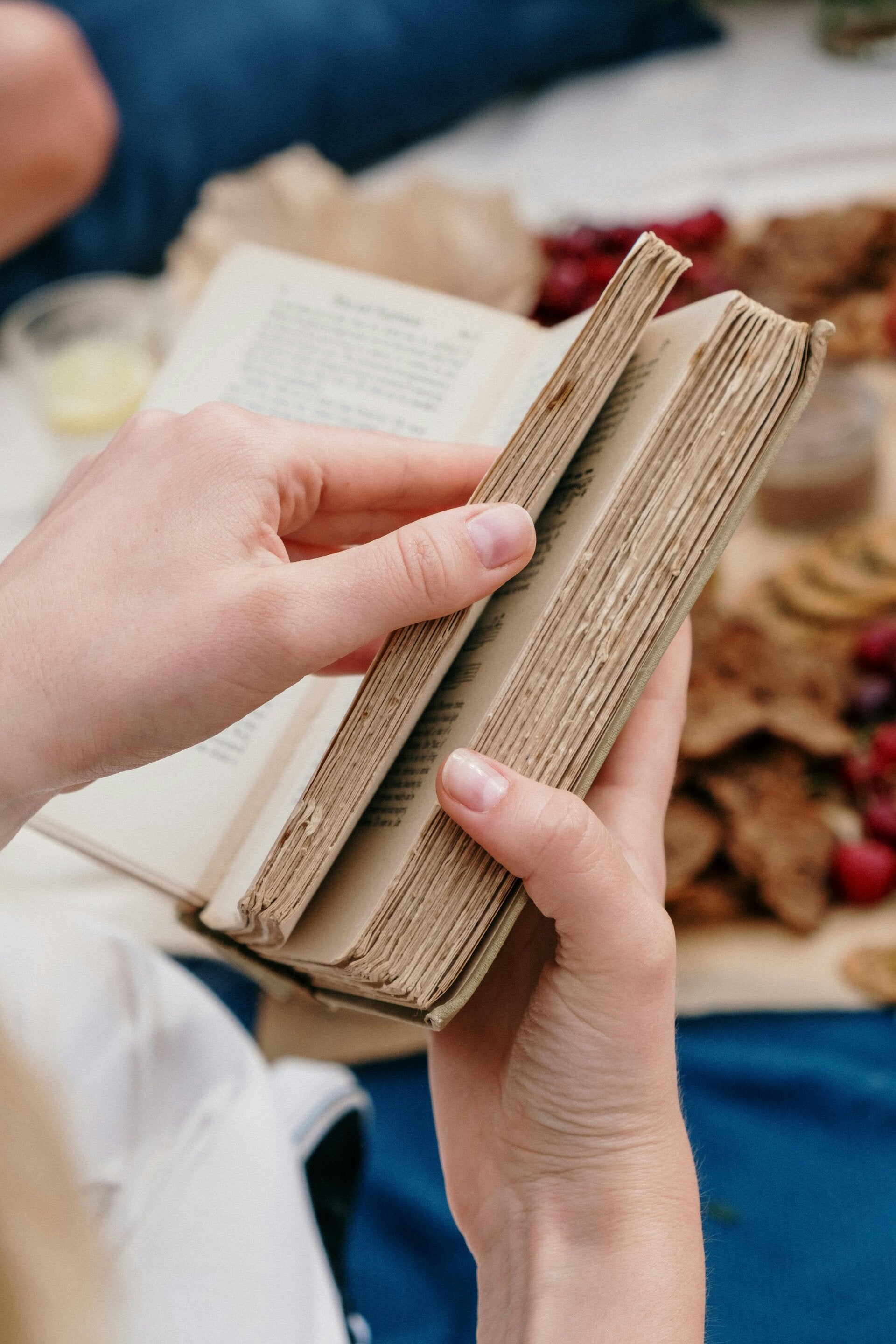
Save that Cookbook: A Guide to Tipping in Loose Cookbook Pages
It has been a pretty gloomy, rainy summer so far. So, what to do on a rainy afternoon? Fix some loose pages in old cookbooks! It's a thrill in finding a vintage cookbook—perhaps a tattered community collection from the 1950s or a stained, handwritten family heirloom— bursting with the evidence of a life well-lived. Often, when I open an old book there will be a characteristic "pop"—the sound of a signature pulling away from the binding or a single, cherished recipe page finally surrendering its connection to the spine.
Finding loose pages in a cookbook you’ve purchased for resale or for your own collection can feel like finding a lost treasure map. Whether it’s a handwritten note for a "secret" holiday cookie or a printed recipe clipped from a 1960s newspaper, these pages are part of the book’s soul. They deserve to be reattached with care, dignity, and a respect for the integrity of the paper. It is part of taking care of your collection.
In the world of antique books, we use a technique called "tipping in." It is an elegant, non-destructive way to marry a loose page back to its original home without resorting to heavy-handed, damaging repairs like masking tape or acidic glues. Here is how you can stabilize your finds and preserve these culinary artifacts for decades to come.
The Golden Rule: Reversibility
Before you touch a single page, remember the cardinal rule of professional archival repair: All repairs should be reversible. Never use clear adhesive tape, duct tape, or heavy craft glue. These materials turn yellow, become brittle, and permanently damage the paper fibers. The goal of tipping in is to create a hinge that holds the page securely but can be removed by a future caretaker without harming the original document.
The Toolkit
You don’t need an expensive workshop to perform these repairs. Most of what you need can be found at a local stationer’s or craft store:
- Archival-quality wheat starch paste or methyl cellulose: These are the gold standards. They are water-soluble and stable.
- A fine-point brush: A small, synthetic watercolor brush works perfectly.
- Japanese tissue (or very thin, acid-free mulberry paper): This is the secret weapon. It is incredibly strong, nearly transparent, and archival.
- A bone folder: This helps you create sharp, clean creases.
- Wax paper: To prevent moisture from sticking other pages together.
- A small weight: A heavy book or a clean brick works well to keep things flat while drying.
Step-by-Step: The Tipping-In Process
1. Assess the Page
First, gently clean the loose page using a soft, dry archival brush to remove any dust. If the edge of the page is frayed or weak, you may want to reinforce it with a small strip of thin Japanese tissue before you begin the tipping process. Ensure the page is facing the correct direction and fits back into the gutter (the inner margin) of the book where it belongs.
2. Create the Hinge
We are not going to glue the entire edge of the page to the next sheet; that will make the book "thick" and cause the spine to break. Instead, we create a thin, flexible hinge.
Cut a strip of Japanese tissue about 1/4 to 1/2 inch wide and the exact length of the page. Place your loose page on a clean, flat surface and apply a very thin line of your wheat starch paste or methyl cellulose along the very edge (about 1/8 inch) of the inner margin side of the page.
3. Attach the Hinge
Lay your strip of Japanese tissue carefully over that wet, pasted edge. Use your bone folder or your fingertips to gently smooth it down. You now have a page with a flexible, archival "wing" of tissue attached to it. Let this dry completely.
4. Tip the Page into the Book
Now, open your cookbook to the exact spot where the page belongs. Take your page (which now has the tissue hinge attached) and apply a tiny amount of paste to the outer side of that same tissue hinge.
Slide the page into the gutter of the book. Press the hinge firmly against the shoulder of the adjacent leaf. The goal is to get it as close to the spine as possible without actually gluing the spine itself—we want the book to continue to open and close smoothly.
5. The Drying Phase
This is the hardest part: patience. Place a piece of wax paper on both sides of your newly tipped-in page. Close the book carefully, ensuring the page isn't wrinkled or folded. Place a heavy weight on top of the book and leave it for at least 12 to 24 hours. The weight ensures that the glue bond is even and that the paper dries flat without warping from the moisture.
Why Tipping in Matters for Your Collection
When you purchase vintage cookbooks, you aren't just buying recipes. You are buying a cultural record of how people lived, what they valued, and how they sustained their families.
When I find loose pages in books at estate sales or thrift shops, I see them as "conversations" held by the previous owners. A recipe card stuck into a 1940s bread cookbook tells me that someone, somewhere, found the original recipe lacking and took the time to find a better one. By tipping these pages in properly, you are validating that contribution. You are ensuring that when you eventually sell that book, the next owner sees it not as a damaged object, but as a cared-for historical document.
A Note on Handwritten Ephemera
Often, the loose pages we find are handwritten slips of paper. These are especially delicate. If you find a recipe written in ink that is prone to smearing (like old fountain pen ink), be extremely careful with moisture. In these cases, it is often better to store the loose document in a clear, archival-quality polyester (Mylar) sleeve tucked into the book, rather than gluing it directly, as moisture from the paste could cause the ink to bleed or run.
Final Thoughts
Restoration is a practice of patience. When I sit in my crafting area, surrounded by the scent of old paper and the quiet anticipation of customers searching for their own piece of history, I find that fixing these books is a form of meditation. It connects me to the cooks of the past—women and men who used these books to nourish their loved ones.
By taking the time to tip in these loose pages with care, you aren't just preparing an item for resale. You are acting as a guardian of a small, delicious slice of human history. Whether it’s a grease-stained index card or a delicate, yellowing newspaper clipping, your touch ensures that these memories remain in the book where they belong, ready to be discovered and used all over again.
Happy hunting, and may your shelves always be full of treasures waiting for a second chance.
Do you have a favorite "find" from an old cookbook that you’ve successfully restored, or perhaps a particularly tricky loose-page puzzle you're trying to solve?
Add comment
Comments