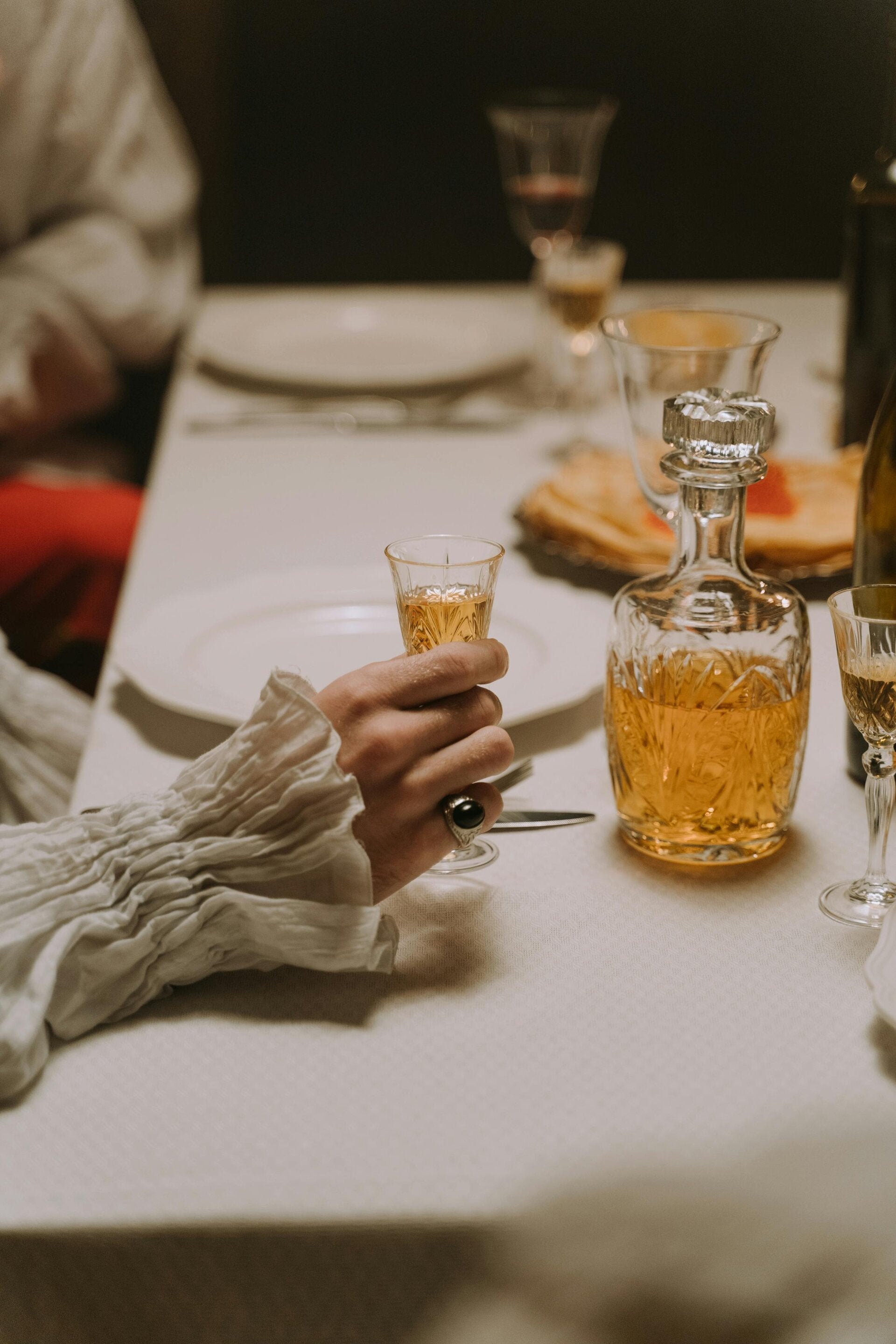
The Art of Crafting Herbal Liqueurs: A Thoughtful, Handmade Gift
Think about this…the magic in taking the bounty of the garden—or the wild edges of a meadow—and capturing its essence in a bottle. It is exciting and creative. As an aromatherapist and someone who has spent years exploring the healing and aesthetic power of plants, I have found that few things are as deeply satisfying as crafting herbal liqueurs. They are more than just a drink; they are bottled memories, liquid sunshine, and a testament to the patient art of slow living.
When you gift someone a bottle of homemade herbal liqueur, you aren't just giving them a cocktail ingredient. You are giving them a labor of love, a piece of your own kitchen craft, and a sophisticated treat that invites them to slow down and savor the moment. Whether it’s for a holiday, a housewarming, or a "just because" gesture, these infusions are elegant, personal, and remarkably easy to create once you understand the simple rhythm of the process.
The Foundations: Understanding Infusion
At its heart, making a liqueur is a two-part harmony between a base spirit and the botanical profile you choose to highlight. The spirit acts as the solvent, drawing out the volatile oils, resins, and flavors from your chosen herbs, roots, flowers, or fruits.
The Spirit (The Solvent)
The quality of your base spirit will define the clarity of your final product. For most herbal liqueurs, a high-proof, neutral grain spirit—like a high-quality vodka (at least 80 proof)—is the gold standard. Vodka is a blank canvas, allowing the delicate floral notes of lavender or the spicy punch of ginger to take center stage without interference. If you prefer a warmer, richer profile, high-proof brandy or even a light rum can provide a wonderful backbone for citrus or deep, woody herbs.
The Botanical Profile
This is where your creativity truly blooms. You can focus on a single herb for a clean, singular experience, or create a complex blend.
- The Aromatics: These provide the "top notes"—think fresh mint, lemon balm, rose petals, or lemon verbena.
- The Depth: These provide the "middle and base notes"—think cinnamon sticks, star anise, ginger root, vanilla beans, or dried angelica root.
- The Balance: Every good liqueur needs a sweetener. Simple syrup (equal parts sugar and water) is the standard, though honey or maple syrup can add incredible layers of complexity.
The Recipe: Honey-Ginger & Lemon Verbena Liqueur
This liqueur is bright, zesty, and warming—perfect for a post-dinner digestive or as a mixer for a sophisticated spritz.
Ingredients:
- 1 ½ cups high-quality vodka
- ½ cup fresh ginger, sliced thinly (no need to peel if organic)
- ¼ cup fresh lemon verbena leaves, lightly crushed
- ½ cup high-quality raw honey
- ¼ cup warm water
Method:
- Infuse: Place the ginger and lemon verbena into a clean glass jar. Pour the vodka over the botanicals, ensuring they are completely submerged. Seal the jar tightly and store it in a cool, dark place.
- Wait: Let the mixture macerate for 2 to 3 weeks. Give the jar a gentle shake every few days to encourage extraction.
- Sweeten: After the infusion period, strain the solids through a fine-mesh sieve lined with a coffee filter. In a small bowl, whisk the honey and warm water together until fully combined.
- Combine & Rest: Stir the honey mixture into your infused vodka. Transfer to a clean, decorative bottle. Allow it to "marry" for at least another week before gifting.
The Recipe: Woodland Rose & Vanilla Cordial
For a softer, more romantic gift, this floral cordial is elegant and pairs beautifully with sparkling wine or served neat in a chilled glass.
Ingredients:
- 1 ½ cups vodka (or light brandy for a warmer profile)
- ½ cup dried, culinary-grade rose petals
- 1 whole vanilla bean, split lengthwise
- ½ cup granulated sugar
- ½ cup water
Method:
- Infuse: Add the rose petals and the split vanilla bean to your jar. Cover with the spirit and seal.
- Wait: This infusion is delicate. Check it after 10 days; if the color is a deep amber and the aroma is strong, it is ready. If not, let it go to 14 days.
- Sweeten: Prepare a simple syrup by bringing the sugar and water to a light simmer until the sugar is dissolved. Let it cool completely.
- Combine: Strain the floral infusion and mix with the cooled syrup. Bottle and let it rest for at least 7 days before wrapping it up with a pretty ribbon.
A Note on History and Tradition
The tradition of infusing spirits with botanicals dates back centuries, rooted in the ancient understanding that plants were our first medicines. Before the advent of modern pharmaceuticals, monks and apothecaries across Europe meticulously crafted "elixirs" and "digestifs." These were not meant for excess but were formulated to aid digestion, soothe the nerves, or provide a warming tonic during the damp, cold months of the year.
The word "cordial" itself comes from the Latin cor, meaning heart. Originally, cordials were concoctions thought to be good for the heart—the seat of vitality. Throughout the Middle Ages and into the Renaissance, the art of the alembic (the distillation apparatus) became the pursuit of the era’s most learned herbalists. They sought to extract the "spirit" of the plant—the very essence that held its medicinal and energetic properties.
While our modern liqueurs have moved away from the apothecary's shelf to the home bar, the spirit of the tradition remains. When we create these infusions today, we are continuing a lineage of botanical curiosity. We are honoring the way humans have long looked to the natural world to create something beautiful, sensory, and shared.
Tips for the Perfect Gift Presentation
Half the joy of a handmade gift is the presentation. Since you are crafting something artisanal, let the packaging reflect that care:
- Glassware: Seek out vintage apothecary-style bottles with glass stoppers. They look beautiful on a bar cart and feel substantial in the hand.
- Labeling: Create custom labels that include the name of the liqueur, the date it was bottled, and a brief "tasting note" (e.g., “Best served chilled over ice with a twist of lemon”).
- Embellishments: Tie a small bundle of dried herbs—perhaps a sprig of dried lavender or a cinnamon stick—to the neck of the bottle with twine. It adds a lovely tactile element that hints at the flavors inside.
- Pairing: If you are feeling extra generous, tuck a small notebook or a set of vintage cocktail napkins into the gift bag.
Making herbal liqueurs is a patient practice, but it is one that rewards you every step of the way—from the scent of the botanicals as you drop them into the jar to the pleasure of watching a loved one enjoy a creation that came entirely from your own hands and your own garden.
As you begin your journey into this craft, remember that there is no "perfect" recipe. Trust your nose, trust your palate, and allow yourself to experiment with the flavors that bring you the most joy. Whether you are blending the zest of a citrus fruit or the warmth of a root, you are bottling the essence of the season—and there is no gift more meaningful than that.
Add comment
Comments