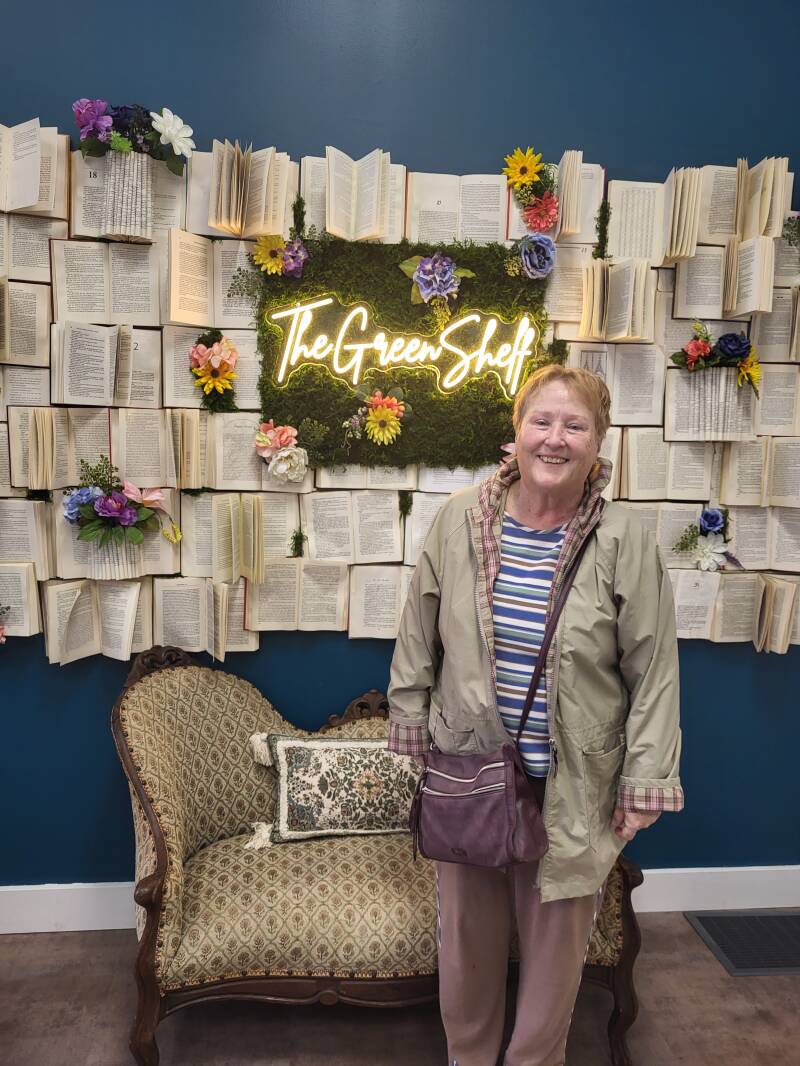
Rooted in Reading: The Green Shelf is a New Chapter in Experiential Retail
Brookville, Indiana, with its historic Main Street and proximity to the scenic Whitewater River valley, has always understood the value of tangible, enduring things. It is a town where history is preserved in brick and mortar, and community is built on face-to-face connection. The day before Valentines this past week, this classic American landscape welcomed a new business that perfectly captures a modern yearning for the authentic and the analog The Green Shelf. It’s a new independent bookstore that opened its doors, but it promises more than just shelves of bestsellers. It offers new, used and classic fiction, a bit of nonfiction and plenty of lovely live plants. The shop aims to cultivate a unique atmosphere by combining the printed word with the vibrant life of potted plants, creating a hybrid retail space dedicated to growth—both intellectual and botanical. It was wonderfully cozy and fun.
The concept is immediately appealing on a sensory level. Imagine the comforting scent of aging paper, (my favorite scent), mingling with the earthy, crisp aroma of damp soil and fresh oxygen. Imagine the visual warmth of colorful book spines nestled amongst the verdant greens of Monstera leaves, trailing Pothos, and architectural snake plants. This new venture in Brookville, Indiana, is not merely a shop; it is a statement about the evolving nature of retail and a testament to the surprising resilience of the physical book in a digital age.
The Synergy of Soil and Stories
The fusion of bookstores and plant shops is a concept that has been quietly germinating in urban centers across the globe over the last decade, from London to Portland. However, bringing this trend to Brookville represents a unique and refreshing addition to the local business landscape. It is a move away from purely transactional retail toward "experiential" retail—giving customers a reason to leave their homes not just to buy something, but to feel something.
The connection between reading and gardening, or at least appreciating nature, is deeply rooted. Both are "slow" activities. They require patience, nurturing, and quiet contemplation. In a high-speed, notification-driven world, the act of sitting under a fiddle-leaf fig with a physical novel is a form of gentle rebellion.
Furthermore, the pairing makes solid business sense. The "plant parent" demographic—largely driven by Millennials and Gen Z seeking to bring nature into apartment living—overlaps significantly with the demographic that has driven the recent resurgence in print books. Both books and plants are highly "Instagrammable" objects that signify a certain lifestyle centered on wellness, coziness (often referred to by the Danish term hygge), and intellectual curiosity. By offering both, the Brookville store creates a lifestyle destination rather than just a repository for inventory.
The Rollercoaster History of the American Indie
To appreciate the significance of a new independent bookstore opening today, one must understand the turbulent history of the industry. The American independent bookstore was once the undisputed king of literary commerce. Post-WWII America saw a golden age where the local bookseller was a community gatekeeper, a curator of tastes, and a hub for local intellectual life.
Then came the turbulence of the 1980s and 90s. This era was defined by the aggressive expansion of the "big box" chains—the Borders and Barnes & Nobles of the world. These megastores offered massive inventory, deep discounts that small shops couldn't match, and in-store cafes that encouraged lingering. The narrative of the 90s, immortalized in films like You’ve Got Mail, was the inevitable crushing of the quaint local shop by the corporate behemoth. Thousands of independent stores closed their doors during this period, unable to compete on price or volume.
By the turn of the millennium, the landscape had flattened. The independents that survived were hardy, niche, or exceptionally well-loved by their communities. But just as the dust was settling from the chain-store wars, a new, invisible threat emerged from Seattle.
The Digital Threat and the Unexpected Plot Twist
The advent of Amazon and the subsequent release of the Kindle e-reader in 2007 sent a wave of genuine panic through the publishing world. Industry pundits predicted the death of the physical book within a decade. Why would anyone carry heavy paper blocks when they could have a library in their pocket, instantly delivered at half the price? The brick-and-mortar store seemed destined for the same fate as the video rental shop—an obsolete relic of a pre-digital age.
But then, a funny thing happened on the way to the digital apocalypse. The narrative twisted.
While e-books captured a significant slice of the market—particularly for genre fiction like romance and thrillers—their growth plateaued. Audiobooks exploded in popularity, but they tended to supplement reading rather than replace it entirely. What became clear over the last ten years is the phenomenon of "digital fatigue." People spend their workdays staring at screens; they increasingly do not want to spend their leisure time doing the same.
The physical book—as an object—gained renewed appreciation. The feel of the paper, the smell of the ink, the ability to physically turn a page, and the beautiful cover design became valuable assets that a digital file could not replicate.
This desire for the tangible is exactly why independent bookstores have staged a remarkable, unexpected comeback over the last decade. The American Booksellers Association has reported sustained growth in membership, with more indie stores opening than closing in recent years.
The Modern Formula: Community over Commodity
The independent bookstores thriving today—and the model the new Brookville store seems to be embracing—succeed because they do what algorithms cannot. Amazon is a brilliant vending machine, but it is terribly impersonal.
A modern indie bookstore survives by becoming a "third place"—a community anchor outside of home and work. They succeed through curation, hand-selling personal recommendations, hosting author events, running children’s story hours, and, increasingly, by hybridizing their offering. They add coffee shops, bars, gift sections, and yes, botanical elements.
By integrating live plants, The Green Shelf is doubling down on the need for a physical, sensory experience. You cannot stop and smell the roses (or the jasmine) on a Kindle. You cannot appreciate the variegated leaves of a rare Philodendron on an audiobook.
This new venture is a bet on this small town. It’s a bet that the residents here still value the serendipity of browsing a shelf and finding a book they didn't know they needed. It’s a recognition that in an increasingly virtual world, the most radical and restorative thing we can do is surround ourselves with living things and enduring ideas. When the doors finally open on this green space of literature, it won't just be a place to buy a paperback and a potted fern; it will be a vibrant affirmation that community, nature, and stories are still the roots of a life well-lived.
Add comment
Comments