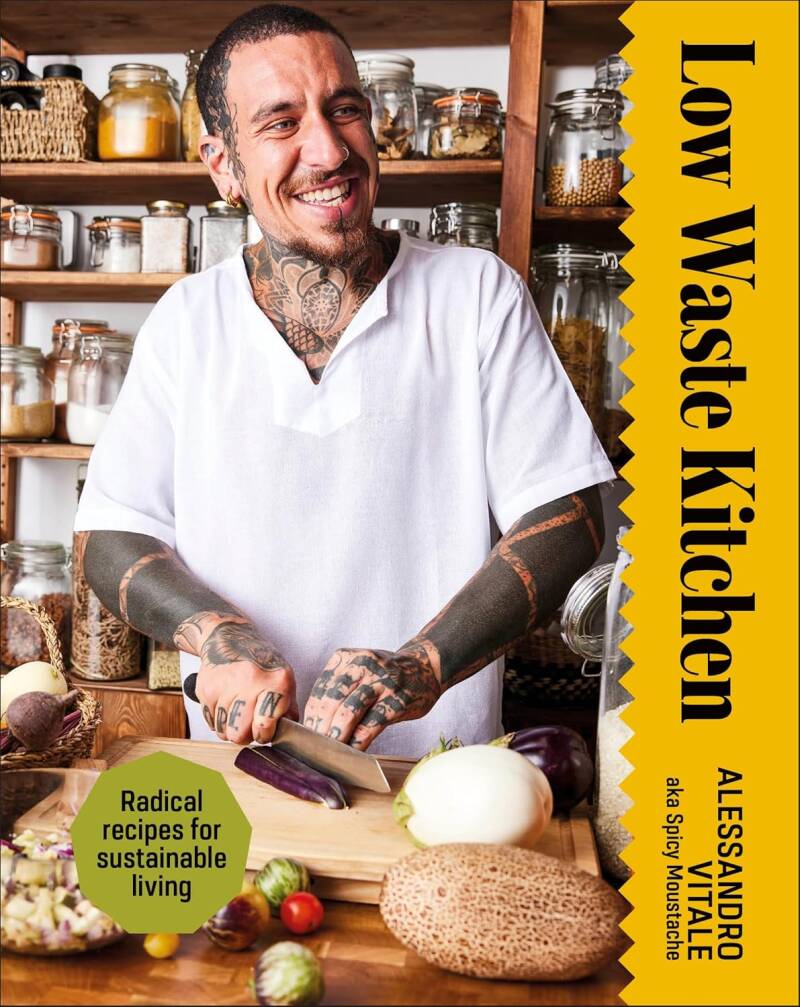
BOOK REVIEW: Low Waste Kitchen: Radical Recipes for Sustainable Living
by Alessandro Vitale
DK Red, 2025 (192 pages)
Alessandro Vitale, the social media star known as the "Spicy Moustache," brings his passion for sustainable living from the digital screen to the printed page in Low Waste Kitchen: Radical Recipes for Sustainable Living. This book is less a traditional cookbook and more a manifesto for a fundamental shift in our relationship with food, guided by a simple yet powerful philosophy: maximize flavor and creativity by minimizing waste. Vitale's approach is delivered in an approachable, non-judgmental tone, designed to invite readers into a more mindful lifestyle without the pressure of achieving immediate zero-waste perfection.
The core of the book lies in its ingenious use of overlooked ingredients. Vitale encourages readers to view every peel, stem, and seed as a valuable resource rather than inevitable trash. The 100 plant-based recipes demonstrate this philosophy in action, transforming items like potato peels into crispy chips, broccoli stems into creamy soup, and leftover bread into pudding. Beyond the recipes, the book is a treasure trove of practical "Spicy Tips" covering smart shopping, proper food storage techniques to extend shelf life, and even DIY household remedies and cosmetics using kitchen scraps like citrus peels or avocado pits. This holistic approach to sustainability empowers readers to make small, consistent changes for a significant environmental impact.
The primary question facing any sustainable living guide is its real-world applicability. Do Vitale's methods translate from an urban gardening enthusiast's lifestyle to the average, busy household? The answer is nuanced, presenting both immense potential and practical challenges.
For the uninitiated, the book's greatest strength is its emphasis on small, manageable steps. The ideas are presented simply, and the tone is encouraging, making it less intimidating than a complete lifestyle overhaul. By starting with basic changes like proper storage or using vegetable scraps for broth, everyday individuals can easily begin their low-waste journey. The financial benefit of using all parts of ingredients also provides a powerful, practical incentive.
However, challenges exist. Sourcing ingredients locally and ensuring the quality needed for "scrap" use can be difficult for those without access to farmers' markets or the time for meticulous meal planning. The "perfect" look of store-bought produce often means edible parts like leaves and stems are already removed, hindering the home cook's ability to utilize them as the book suggests.
For those who grow their own herbs or produce, Vitale's book is a goldmine. Gardeners often end up with an abundance of herbs that quickly wilt if not used or preserved properly. The book's extensive tips on storage (e.g., keeping herbs in water) and creative repurposing offer a direct solution to this common problem. Recipes like beetroot leaf pesto directly leverage home-grown greens that might otherwise be composted. The book provides a renewed sense of purpose and creativity for the home gardener, strengthening their connection to the food growth cycle and maximizing the value of their hard work.
Low Waste Kitchen is a compelling and inspiring read that successfully champions a mindset shift toward sustainability. While some methods may require a certain level of commitment and access to quality produce, the core philosophy and practical, actionable tips make it a valuable resource for almost anyone. It's a testament to creativity and resourcefulness, reminding us that a more sustainable kitchen is an achievable goal, one small step at a time.
The author is an Italian urban farmer and content creator dedicated to sustainable living and zero-waste practices. Drawing on his grandfather’s gardening knowledge, he shares his passion for growing food in small spaces and reconnecting with nature. He is the author of books such as Rebel Gardening and Low Waste Kitchen, which aim to educate a global audience on self-sufficiency and reducing their environmental impact.
Add comment
Comments